Entree: Portugal – Madeira – Carne de Vinho e Alhos (Pork marinated in wine and garlic, braised and pan-fried in its flavorful marinade)
Food safety reminder: Follow safe food-handling practices and use a food thermometer to verify safe internal cooking temperatures.
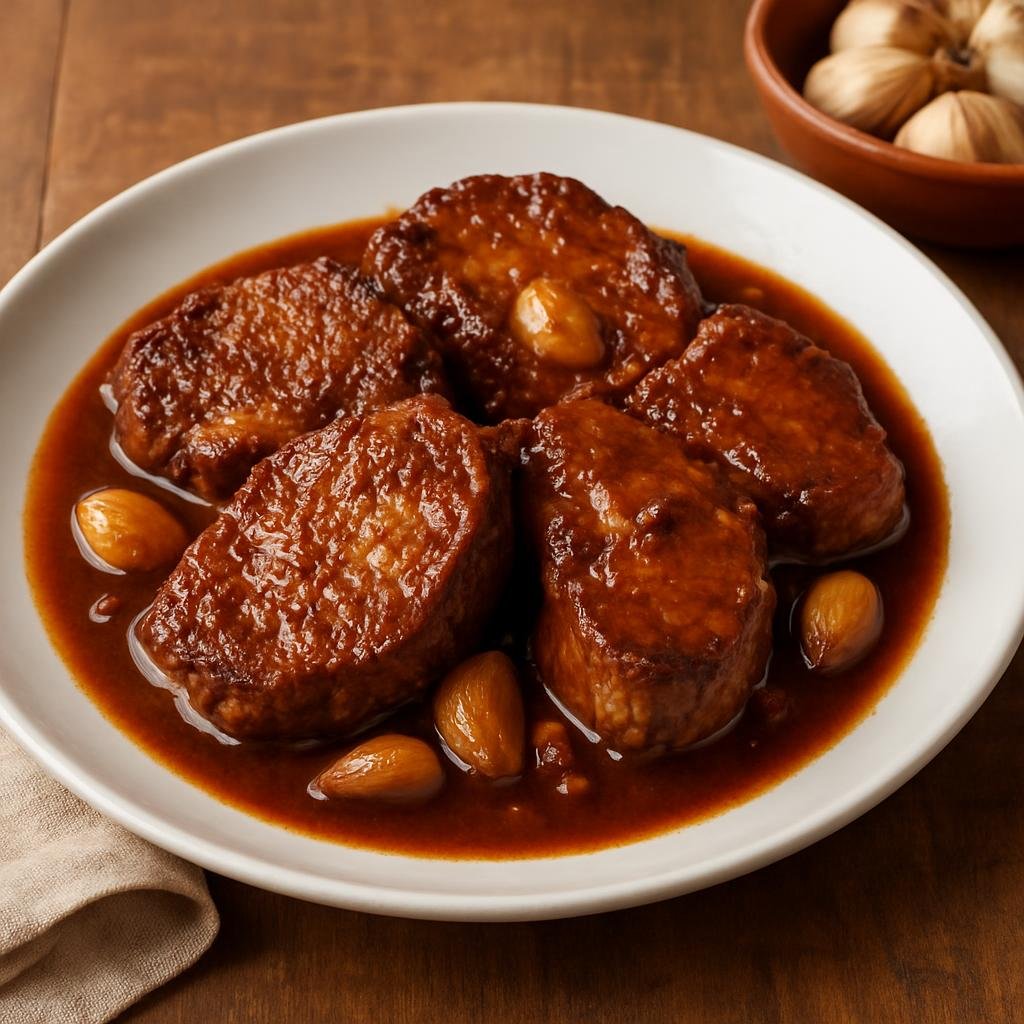
Serving Size: 4
Approximate Time
Prep
15 min
Cook
45 min
Additional
4 hrs
Total
4 hrs 30 min
Ingredients
- 2 lb (900 g) pork shoulder, cut into 1-inch (2.5 cm) cubes
- 1 cup (240 ml) dry Madeira wine
- 6 cloves (about 18 g) garlic, crushed or finely chopped
- 1 tbsp (15 ml) white wine vinegar
- 1 tsp (5 g) coarse salt
- 1 tsp (2 g) freshly ground black pepper
- 1 tsp (3 g) sweet paprika
- 2 bay leaves
- 2 tbsp (30 ml) olive oil (or lard) for frying
- 1/2 cup (120 ml) chicken or pork stock (optional, for braising)
- 1 tbsp (15 ml) chopped fresh parsley for garnish (optional)
Instructions
1. Marinate the pork: in a non-reactive bowl combine the pork cubes, Madeira wine, crushed garlic, white wine vinegar, 1 tsp (5 g) salt, 1 tsp (2 g) pepper, paprika and bay leaves. Cover and refrigerate for at least 4 hours or preferably overnight to develop flavor.
2. Drain and reserve: remove the pork from the marinade and reserve the marinade. Pat pork dry with paper towels.
3. Brown the pork: heat 2 tbsp (30 ml) olive oil in a heavy skillet or Dutch oven over medium-high heat. Add pork in batches so pieces brown without steaming, about 3–4 minutes per side. Remove browned pork and set aside.
4. Deglaze and braise: return all pork to the pot, pour in the reserved marinade and add 1/2 cup (120 ml) stock if using. Bring to a simmer, reduce heat to low, cover and braise gently until pork is tender, about 30–40 minutes.
5. Reduce and finish: remove the lid and increase heat to medium-high to reduce the sauce until slightly thickened. For a more caramelized finish, continue to cook uncovered, stirring occasionally, until the liquid clings to the pork and begins to brown, about 5–10 minutes.
6. Serve: adjust seasoning with salt and pepper to taste, discard bay leaves, sprinkle with chopped parsley if desired, and serve hot with boiled potatoes, steamed vegetables or crusty bread.
Estimated Nutritional Information*
Per serving | Servings: 4
Calories: 612 kcal
Carbohydrates: 3.4 g
Protein: 39.9 g
Fat: 47.7 g
Sodium: 676 mg
Generated: 2026-11-05T19:51:52+00:00
*Values are estimates based on USDA data and mathematical calculations. Actual values may vary. Where data are unavailable, those contributions are excluded.