Entree: South Africa – Karoo – Karoo Lamb Chops (Herb- and garlic-marinated lamb chops seared or grilled to highlight Karoo lamb)
Food safety reminder: Follow safe food-handling practices and use a food thermometer to verify safe internal cooking temperatures.
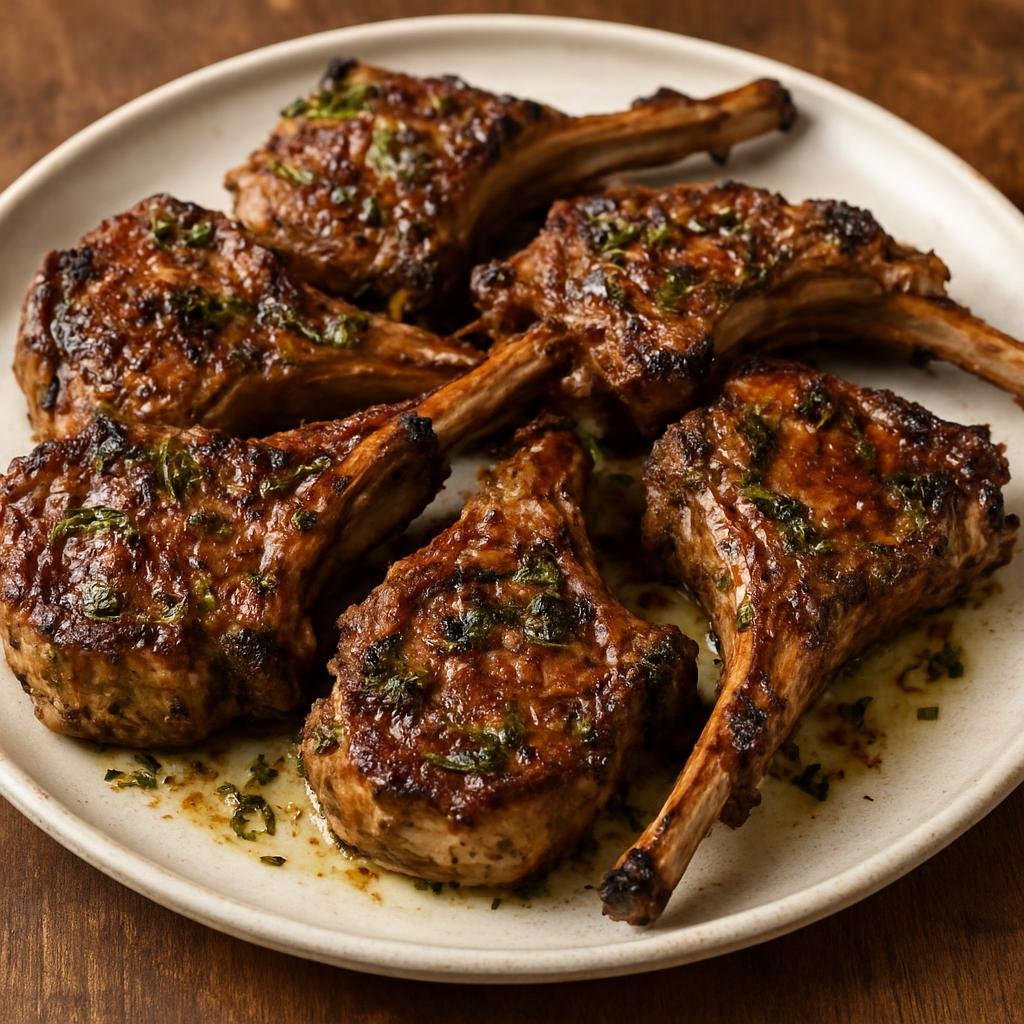
Serving Size: 4
Approximate Time
Prep
15 min
Cook
7 min
Additional
55 min
Total
1 hr 5 min
Ingredients
- 4 lamb rib chops, approx. 6 oz (170 g) each
- 3 tbsp (45 ml) olive oil
- 2 tbsp (30 ml) lemon juice, freshly squeezed
- 1 tsp (5 ml) red wine vinegar
- 3 cloves garlic, minced (approx. 9 g)
- 1 tbsp (15 ml) lemon zest (from 1 lemon)
- 1 tbsp (15 ml) chopped fresh rosemary (approx. 3 g)
- 1 tsp (5 ml) chopped fresh thyme (approx. 1 g)
- 2 tbsp (28 g) unsalted butter
- 1 1/2 tsp (8 g) coarse kosher salt, divided
- 1 tsp (2 g) freshly ground black pepper, divided
- 1/2 tsp (1 g) smoked paprika (optional, for slight smokiness)
- 1 lemon, halved, for serving
- Fresh rosemary sprigs, for garnish (optional)
Instructions
1. Marinate the lamb: In a bowl combine olive oil, lemon juice, red wine vinegar, minced garlic, lemon zest, chopped rosemary, thyme, 1 tsp kosher salt and 1/2 tsp black pepper. Add the lamb chops, turning to coat. Cover and refrigerate 30 minutes to 2 hours (shorter if using finer cuts).
2. Bring chops to room temperature: Remove chops from fridge 20–30 minutes before cooking. Pat dry and season both sides with remaining 1/2 tsp kosher salt and 1/2 tsp black pepper.
3. Preheat and sear: Heat a heavy skillet or cast-iron pan over medium-high heat until very hot, or prepare a medium-high charcoal or gas grill. Add 1 tbsp olive oil to pan (or brush chops with oil for grill). Sear chops 2–3 minutes per side for medium-rare (internal temperature 130–135°F / 55–57°C), longer to desired doneness.
4. Baste with butter: In the last minute of cooking, reduce heat to medium-low, add butter to pan and spoon melted butter over chops to baste and develop color. If grilling, finish with a small knob of butter melted over each chop.
5. Rest and serve: Transfer chops to a cutting board and let rest 5 minutes to retain juices. Serve with lemon halves for squeezing and garnish with rosemary sprigs. Carve or serve whole as preferred.
Estimated Nutritional Information*
Per serving | Servings: 4
Calories: 615 kcal
Carbohydrates: 3.7 g
Protein: 18.6 g
Fat: 58.7 g
Saturated fat: 23.8 g
Fiber: 1 g
Sodium: 847 mg
Potassium: 299 mg
Calcium: 38 mg
Iron: 2.14 mg
Vitamin A: 56 µg RAE
Vitamin C: 14.8 mg
Generated: 2026-11-05T19:51:29+00:00
*Values are estimates based on USDA data and mathematical calculations. Actual values may vary. Where data are unavailable, those contributions are excluded.