Entree: American Samoa – Southern Culinary Region – Lu Pulu (Taro leaves wrapped around corned beef and slowly braised in coconut milk)
Food safety reminder: Follow safe food-handling practices and use a food thermometer to verify safe internal cooking temperatures.
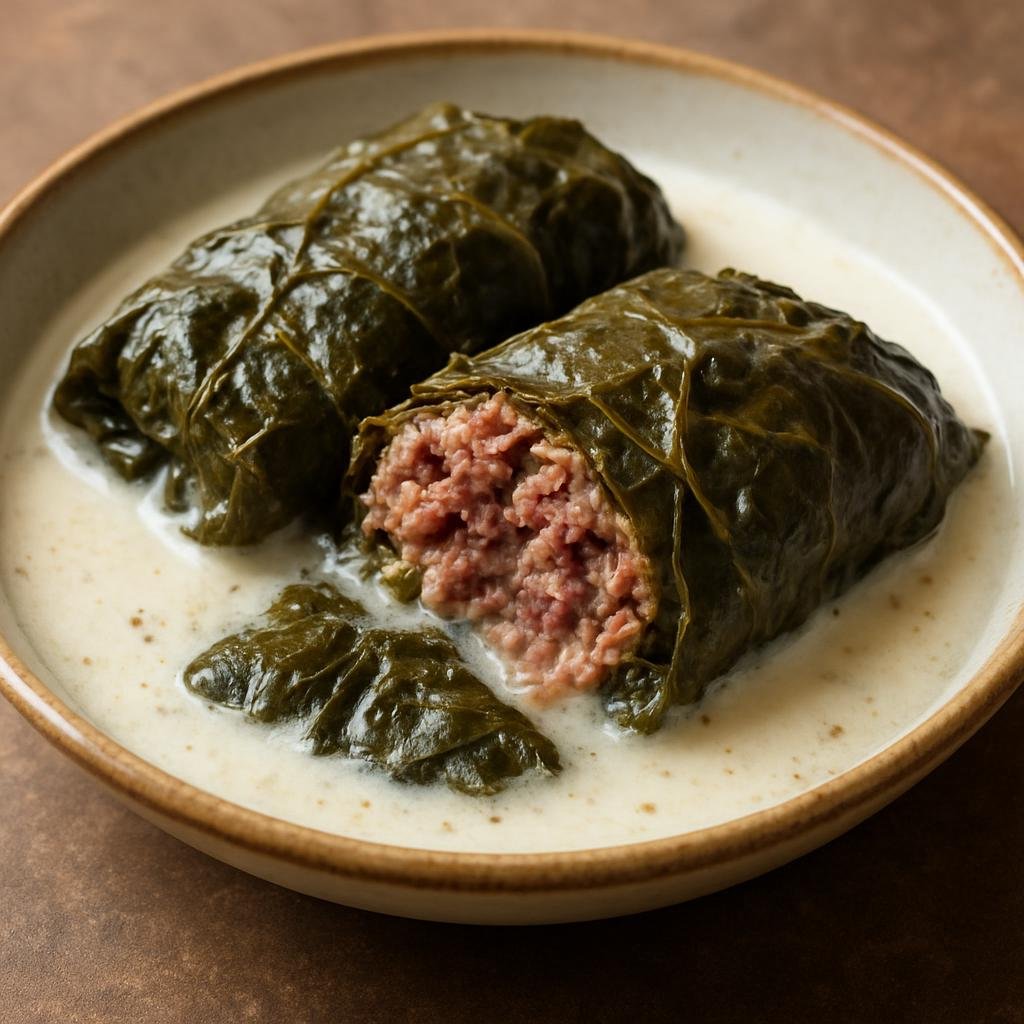
Serving Size: 4
Approximate Time
Prep
20 min
Cook
1 hr
Total
1 hr 20 min
Ingredients
US weight measurements (approximate). oz means weight ounces, not fluid ounces.
- 2 (12 oz) cans corned beef, about 24 oz total, shredded or broken into chunks
- 1 lb fresh taro leaves, stems removed and leaves rinsed (or 10–12 frozen leaves, thawed)
- 2 cups (480 ml) full-fat coconut milk
- 1 cup (240 ml) coconut cream or extra coconut milk (optional for richer sauce)
- 1 large onion, finely chopped, about 6 oz
- 3 cloves garlic, minced
- 1 tbsp (15 ml) vegetable oil or coconut oil
- 1 tsp salt, plus more to taste
- ½ tsp ground black pepper
- 1–2 tbsp (15–30 ml) lemon or lime juice (optional, to brighten)
Show original ingredient measurements
- 2 (12 oz) cans corned beef, about 24 oz (680 g) total, shredded or broken into chunks
- 1 lb (450 g) fresh taro leaves, stems removed and leaves rinsed (or 10–12 frozen leaves, thawed)
- 2 cups (480 ml) full-fat coconut milk
- 1 cup (240 ml) coconut cream or extra coconut milk (optional for richer sauce)
- 1 large onion, finely chopped, about 6 oz (170 g)
- 3 cloves garlic, minced
- 1 tbsp (15 ml) vegetable oil or coconut oil
- 1 tsp (5 g) salt, plus more to taste
- ½ tsp (2.5 g) ground black pepper
- 1–2 tbsp (15–30 ml) lemon or lime juice (optional, to brighten)
Instructions
Gram weights below are shown as approximate US weights.
1. If using fresh taro leaves, blanch leaves in boiling water 1–2 minutes until pliable, then drain and cool. Remove any thick central stems or tough ribs and set leaves aside.
2. In a skillet, heat oil over medium. Sauté chopped onion until translucent, about 5 minutes. Add garlic and cook 1 minute. Add shredded corned beef and stir to combine, breaking up large pieces; cook 3–4 minutes to warm and blend flavors. Season with 1 tsp salt and ½ tsp black pepper.
3. Lay a taro leaf flat (shiny side down). Place about 3–4 tbsp (45–60 ml) of the corned beef mixture toward one end, then fold sides over and roll tightly to make a neat bundle. Repeat until all filling is used, using larger leaves to wrap multiple small bundles if needed.
4. Arrange bundles seam-side down in a wide shallow pot or baking dish in a single layer. Pour coconut milk and coconut cream (if using) over the bundles so they are partially submerged; add lemon or lime juice if desired.
5. Cover the pot tightly (use a lid or foil) and simmer gently over low heat for 45–60 minutes, or bake covered at 350°F (175°C) for 45–60 minutes, until leaves are tender and sauce is fragrant and slightly thickened.
6. Taste and adjust salt. Serve hot with steamed rice or traditional taro/banana accompaniment.
Show original instructions
1. If using fresh taro leaves, blanch leaves in boiling water 1–2 minutes until pliable, then drain and cool. Remove any thick central stems or tough ribs and set leaves aside.
2. In a skillet, heat oil over medium. Sauté chopped onion until translucent, about 5 minutes. Add garlic and cook 1 minute. Add shredded corned beef and stir to combine, breaking up large pieces; cook 3–4 minutes to warm and blend flavors. Season with 1 tsp (5 g) salt and ½ tsp (2.5 g) black pepper.
3. Lay a taro leaf flat (shiny side down). Place about 3–4 tbsp (45–60 ml) of the corned beef mixture toward one end, then fold sides over and roll tightly to make a neat bundle. Repeat until all filling is used, using larger leaves to wrap multiple small bundles if needed.
4. Arrange bundles seam-side down in a wide shallow pot or baking dish in a single layer. Pour coconut milk and coconut cream (if using) over the bundles so they are partially submerged; add lemon or lime juice if desired.
5. Cover the pot tightly (use a lid or foil) and simmer gently over low heat for 45–60 minutes, or bake covered at 350°F (175°C) for 45–60 minutes, until leaves are tender and sauce is fragrant and slightly thickened.
6. Taste and adjust salt. Serve hot with steamed rice or traditional taro/banana accompaniment.
Estimated Nutritional Information*
Per serving | Servings: 4
Calories: 1000 kcal
Carbohydrates: 23.8 g
Protein: 57.3 g
Fat: 79.1 g
Saturated fat: 55.1 g
Cholesterol: 146 mg
Fiber: 9.2 g
Sodium: 2035 mg
Potassium: 1557 mg
Calcium: 185 mg
Iron: 9.63 mg
Vitamin A: 271 µg RAE
Vitamin C: 70 mg
Vitamin D: 0.3 µg
Generated: 2026-11-05T19:50:45+00:00
*Values are estimates based on USDA data and mathematical calculations. Actual values may vary. Where data are unavailable, those contributions are excluded.