Entree: Slovakia – Southern Culinary Region – Fazuľová Polievka s Údeným (Hearty white bean soup with smoked pork and root vegetables)
Food safety reminder: Follow safe food-handling practices and use a food thermometer to verify safe internal cooking temperatures.
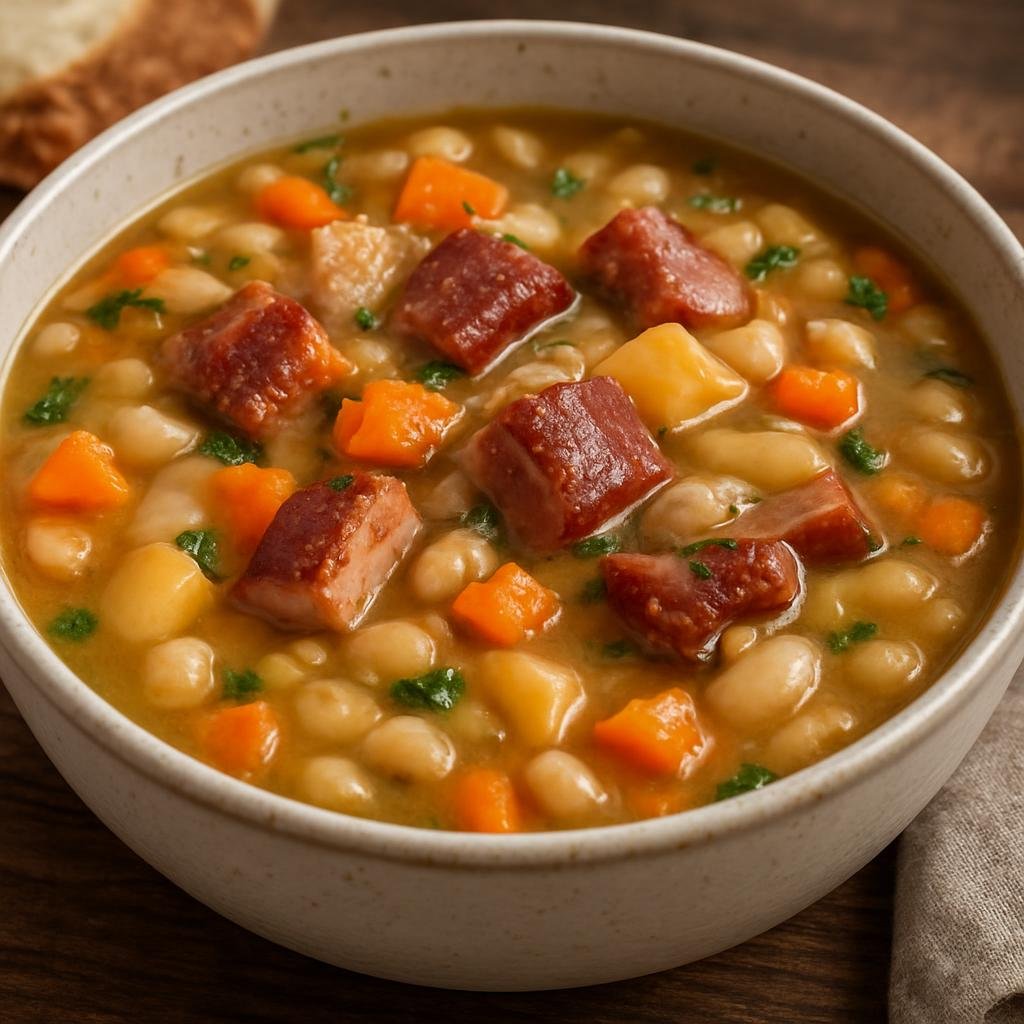
Serving Size: 6
Approximate Time
Prep
20 min
Cook
1 hr 50 min
Additional
10 min
Total
2 hrs 20 min
Ingredients
- 1 lb (454 g) dried white beans (navy or cannellini), soaked overnight and drained
- 1 smoked ham hock, approx. 1 lb (450 g)
- 8 oz (225 g) smoked Slovak sausage (klobása) or kielbasa, sliced
- 2 tbsp (30 ml) lard or vegetable oil
- 1 large onion, finely chopped, about 8 oz (225 g)
- 3 garlic cloves, minced, about 9 g
- 2 medium carrots, sliced, about 6 oz (170 g)
- 1 medium parsnip, sliced, about 4 oz (115 g)
- 2 medium potatoes, peeled and diced, about 1 lb (450 g)
- 1 tbsp (15 g) sweet paprika (preferably Hungarian)
- 1 tsp (2 g) caraway seeds, lightly crushed
- 2 bay leaves
- 8 cups (1.9 L) water or light vegetable/beef broth
- Salt and black pepper to taste
- 1/4 cup (15 g) fresh parsley, chopped for garnish
- Optional: 2 tbsp (30 ml) sour cream per bowl when serving
Instructions
1. Rinse soaked beans and place in a large heavy pot with the ham hock and 8 cups (1.9 L) water or broth. Bring to a boil, reduce heat and simmer gently, partially covered, for 45 minutes.
2. Meanwhile heat the lard or oil in a skillet over medium heat. Sauté the onion until soft and golden, 6–8 minutes. Add garlic and sauté 30 seconds.
3. Stir in the paprika and caraway seeds briefly (remove from direct heat if paprika risks burning), then add the sautéed aromatics to the pot with the beans.
4. Add carrots and parsnip to the pot. Continue simmering for another 30 minutes until beans begin to soften.
5. Add the diced potatoes and sliced smoked sausage; simmer 15–20 more minutes until beans and potatoes are tender and the ham hock meat is falling from the bone.
6. Remove the ham hock, shred the meat and return it to the soup; discard bone and excess fat. Taste and season with salt and pepper as needed.
7. Let soup rest off heat 10 minutes to develop flavor. Serve hot, garnished with chopped parsley and an optional dollop of sour cream.
Estimated Nutritional Information*
Per serving | Servings: 6
Calories: 624 kcal
Carbohydrates: 68.9 g
Protein: 31.1 g
Fat: 26.3 g
Sodium: 807 mg
Potassium: 2097 mg
Calcium: 243 mg
Iron: 9.71 mg
Vitamin C: 16.6 mg
Generated: 2026-11-05T19:49:20+00:00
*Values are estimates based on USDA data and mathematical calculations. Actual values may vary. Where data are unavailable, those contributions are excluded.