Entree: Republic of the Congo – Southern Culinary Region – Ndakala (Stewed smoked small fish cooked in a spicy palm-oil tomato sauce)
Food safety reminder: Follow safe food-handling practices and use a food thermometer to verify safe internal cooking temperatures.
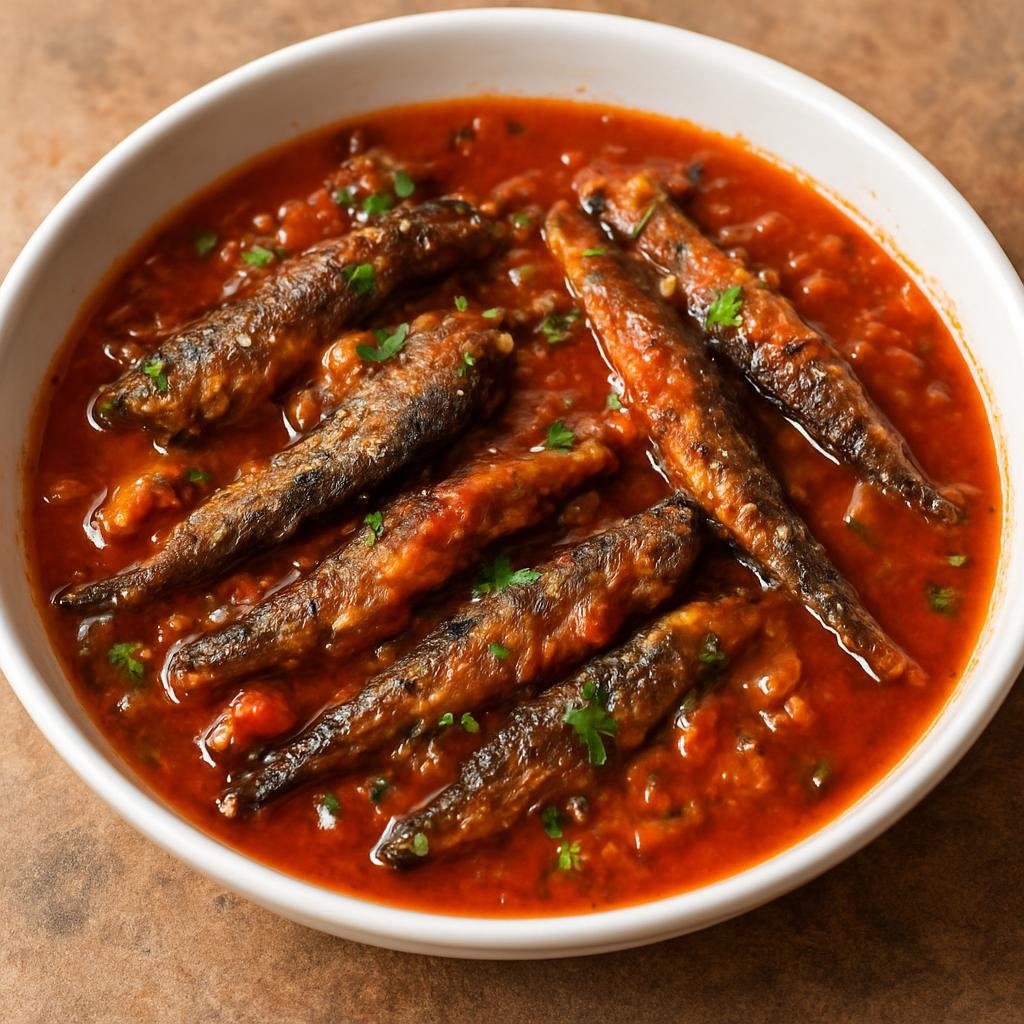
Serving Size: 4
Approximate Time
Prep
15 min
Cook
20 min
Total
35 min
Ingredients
12 small smoked ndakala fish, approx. 12 oz (340 g) gross; estimated edible portion 240 g
3 tbsp (45 ml) palm oil
1 tbsp (15 ml) vegetable oil
1 large onion, thinly sliced, about 8 oz (225 g)
3 cloves (9 g) garlic, minced
1-2 Scotch bonnet or habanero peppers, seeded and minced (about 10–20 g) or to taste
2 large tomatoes, chopped, about 10 oz (300 g)
1 tbsp (15 ml) tomato paste
1 cup (240 ml) water or fish stock (such as fish stock)
1 cup (150 g) fresh okra, sliced (or frozen)
1 tsp (5 g) smoked paprika
1 bouillon cube, crushed
Salt to taste
2 tbsp (30 ml) lime juice or to taste
2 tbsp (8 g) chopped fresh parsley or scent leaves
Instructions
1. Rinse the ndakala briefly under cold water and pat dry. If whole, remove large heads if desired and keep small bones.
2. Heat 1 tbsp (15 ml) palm oil in a large skillet or pot over medium-high heat and lightly fry the ndakala 1–2 minutes per side until aromatic and lightly crisp; remove and set aside.
3. Add remaining 2 tbsp (30 ml) palm oil and 1 tbsp (15 ml) vegetable oil to the pot. Sauté the onion until soft and translucent, about 5 minutes, then add garlic and minced pepper and cook 1 minute.
4. Stir in tomato paste and chopped tomatoes; cook until the tomatoes break down and form a thick sauce, about 6–8 minutes.
5. Pour in 1 cup (240 ml) water or fish stock, add smoked paprika and crushed bouillon cube, and bring to a gentle simmer.
6. Return the fried ndakala to the pot, cover, and simmer gently 8–10 minutes to let flavors meld.
7. Add sliced okra and simmer another 5–7 minutes until okra is tender and stew slightly thickened. Taste and adjust salt and heat; stir in lime juice and chopped parsley just before serving.
8. Serve hot over steamed rice, with fufu, or boiled cassava to soak up the sauce.
Estimated Nutritional Information*
Per serving | Servings: 4
Calories: 265 kcal
Carbohydrates: 14.7 g
Protein: 19.2 g
Fat: 15.2 g
Saturated fat: 5.9 g
Cholesterol: 46 mg
Fiber: 3.9 g
Sugar: 6.1 g
Sodium: 832 mg
Potassium: 787 mg
Calcium: 113 mg
Iron: 2.13 mg
Vitamin A: 104 µg RAE
Vitamin C: 35 mg
Generated: 2026-11-06T06:54:31+00:00
*Values are estimates based on USDA data and mathematical calculations. Actual values may vary. Where data are unavailable, those contributions are excluded.