Entree: Mongolia – Southern Culinary Region – банш ➤ bansh (Small boiled meat dumplings typically served in broth)
Food safety reminder: Follow safe food-handling practices and use a food thermometer to verify safe internal cooking temperatures.
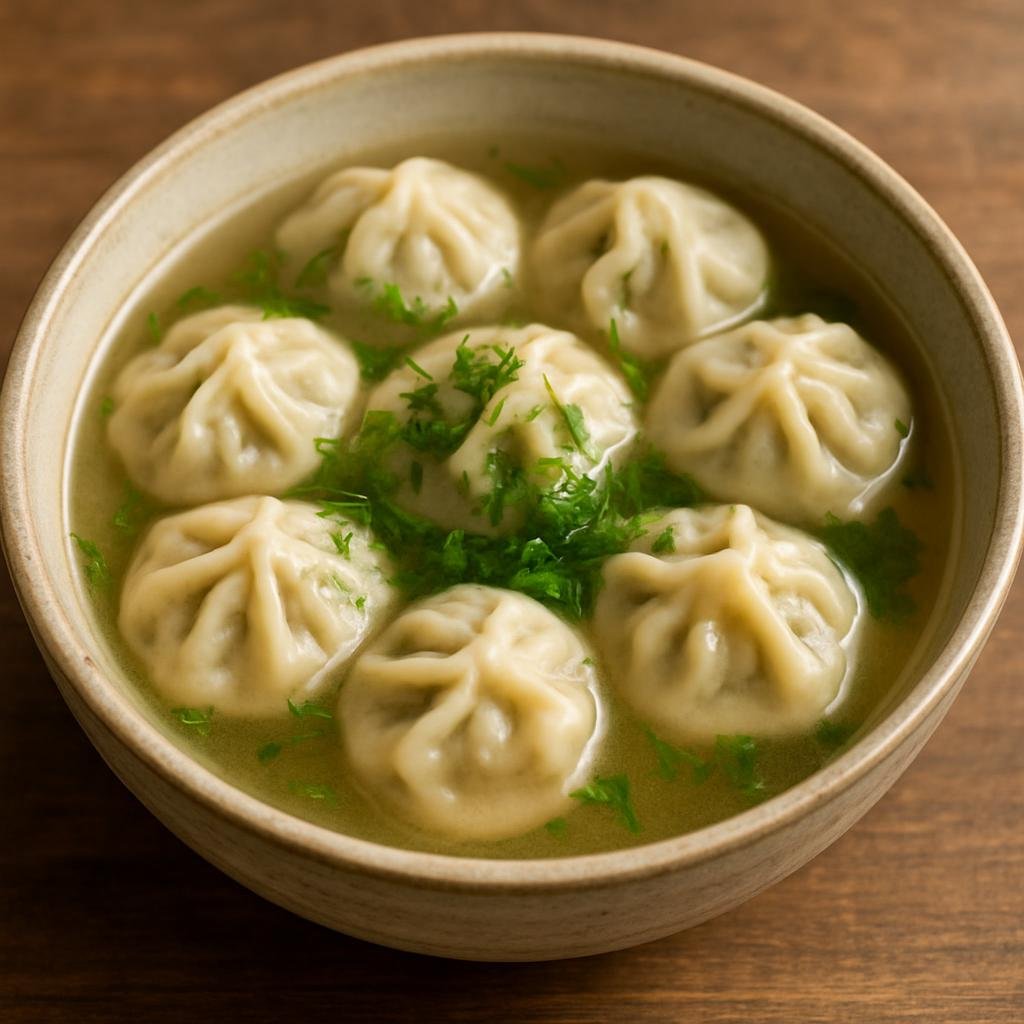
Serving Size: 4
Approximate Time
Prep
30 min
Cook
10 min
Additional
20 min
Total
1 hr
Ingredients
- 3 cups (360 g) all-purpose flour
- 1 tsp (5 g) kosher salt, plus more for boiling
- 1 cup (240 ml) warm water (adjust as needed for dough)
- 1 lb (454 g) ground mutton or lamb
- 1 medium onion, approx. 6 oz (170 g), finely chopped
- 2 cloves garlic, minced
- 1 tsp (5 g) ground black pepper
- 1 tsp (5 g) ground cumin (optional, traditional in some regions)
- 2 tbsp (30 ml) melted lamb fat or vegetable oil
- 6 cups (1.4 L) beef or lamb broth (for serving) or water if making plain
- 2 medium carrots, approx. 8 oz (225 g), sliced (optional for broth)
- 2 tbsp (30 g) butter for finishing (optional)
- Dried dill or chopped green onion for garnish
Instructions
1. Make dough: combine flour and 1 tsp (5 g) salt in a bowl, add warm water gradually and mix to form a firm, smooth dough; knead 5 minutes, cover and rest 20 minutes.
2. Make filling: in a bowl combine ground mutton 1 lb (454 g), chopped onion, garlic, pepper, cumin if using, and 2 tbsp (30 ml) melted fat or oil; mix until cohesive and season to taste.
3. Roll and shape: divide dough into quarters, roll each portion thin (about 1/16 inch / 1.5 mm). Use a 2-inch (5 cm) round cutter or a glass to cut circles. Place about 1/2 tsp (approx. 5–7 g) filling in center of each circle, fold and pinch edges to form small dumplings. Repeat to make roughly 40–60 bansh.
4. Cook dumplings: bring broth or salted water with carrots (if using) to a gentle boil in a large pot. Add bansh in batches, stir gently to prevent sticking, and cook until they float and are tender, about 5–7 minutes.
5. Finish and serve: ladle bansh with broth into bowls, add a pat of butter if desired and garnish with dill or green onion. Bansh can also be drained and briefly tossed in melted butter before serving.
Nutritional Information*
Per serving | Servings: 4
Calories: 802 kcal**
Carbohydrates: 80.8 g**
Protein: 30.4 g**
Fat: 38.9 g**
Saturated fat: 15.8 g**
Cholesterol: 98 mg**
Fiber: 5.2 g**
Sugar: 5.5 g**
Sodium: 1585 mg**
Potassium: 668 mg**
Calcium: 98 mg**
Iron: 7.19 mg**
Vitamin A: 522 µg RAE**
Vitamin C: 7 mg**
Vitamin D: 0.1 µg**
Generated: 2026-11-05T19:47:31+00:00
*Nutrition is estimated using recipe ingredients, serving size, and USDA data. Actual values may vary.
**This value excludes unavailable contributions for this nutrient and is not a complete total.