Entree: Lebanon – Bekaa Valley – مجدرة ➤ Mujaddara (Lentils and rice cooked together and topped with deeply caramelized onions)
Food safety reminder: Follow safe food-handling practices and use a food thermometer to verify safe internal cooking temperatures.
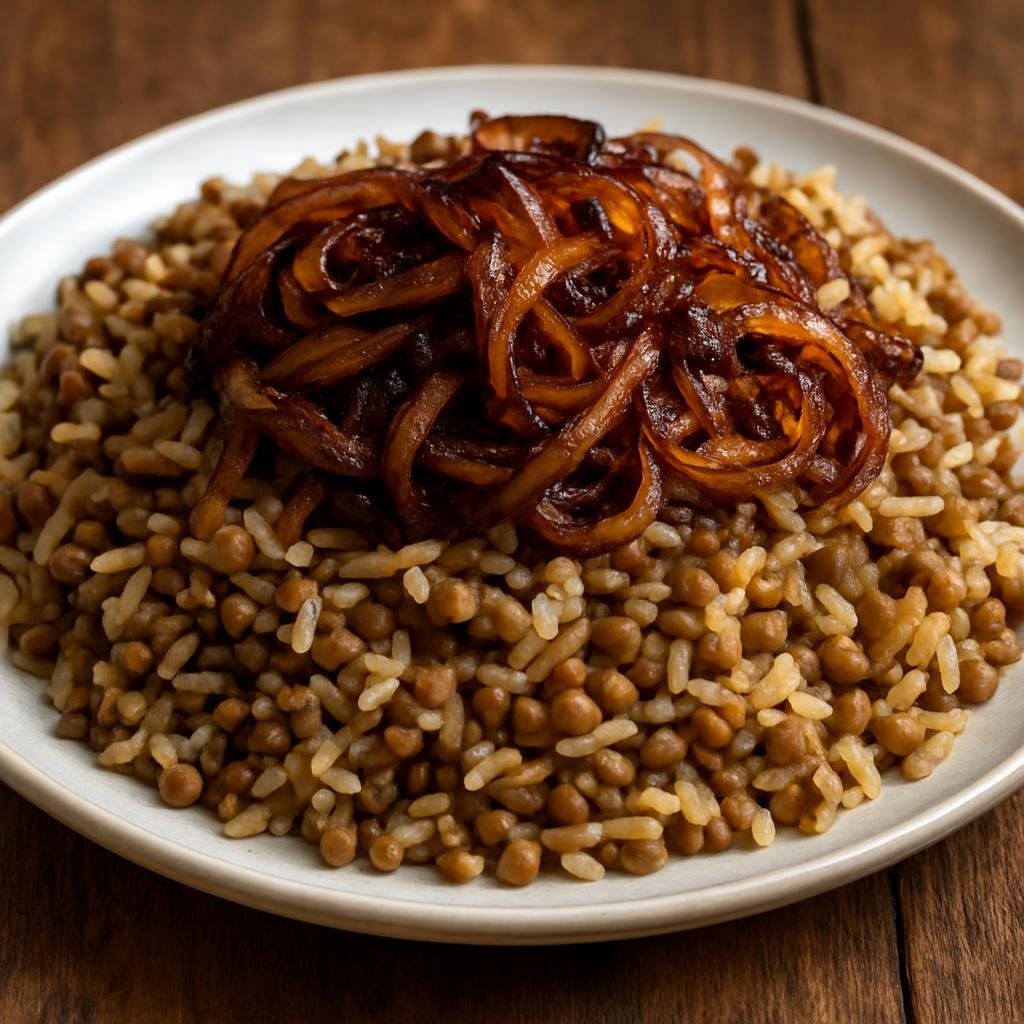
Serving Size: 4
Approximate Time
Prep
10 min
Cook
50 min
Total
1 hr
Ingredients
- 1 cup (200 g) brown or green lentils, rinsed
- 2 cups (390 g) long-grain rice, rinsed
- 4 1/2 cups (1.06 L) low-sodium vegetable or chicken broth
- 1/2 cup (120 ml) olive oil, divided
- 4 large onions, thinly sliced (about 1 lb / 450 g)
- 1 1/2 tsp (8 g) kosher salt, plus more to taste
- 1 tsp (5 g) ground cumin
- 1/2 tsp (2 g) ground black pepper
- 1/4 tsp (1 g) ground allspice or a pinch of cinnamon (optional)
- 2 tbsp (30 ml) lemon juice (optional)
- 2 tbsp (8 g) chopped fresh parsley for garnish
- 1 cup (240 g) plain yogurt for serving (optional)
Instructions
1. Rinse lentils under cold water, then place in a medium saucepan and cover with water. Bring to a simmer and cook 10 minutes; drain and set aside.
2. In a heavy pot, heat 2 tbsp (30 ml) of the olive oil over medium heat. Add the rinsed rice and stir for 1 minute to coat grains, then add the par-cooked lentils, 4 1/2 cups (1.06 L) broth, 1 tsp (5 g) cumin, 1 1/2 tsp (8 g) salt, and 1/2 tsp (2 g) pepper. Bring to a boil, reduce to low, cover, and simmer 15–20 minutes until liquid is absorbed and rice is tender.
3. While rice and lentils cook, heat the remaining 6 tbsp (90 ml) olive oil in a wide skillet over medium-high heat. Add the thinly sliced onions and cook, stirring often, until deeply golden and caramelized, 20–30 minutes. Reduce heat if onions begin to burn; patience yields the best flavor.
4. When onions are deeply caramelized, spoon off any excess oil into a small bowl (reserve for drizzling). Taste and adjust seasoning of the rice and lentil mixture.
5. Fluff the rice and lentils with a fork, transfer to a serving dish, and mound the caramelized onions on top. Drizzle a little of the reserved onion oil and 2 tbsp (30 ml) lemon juice over the dish if using.
6. Garnish with chopped parsley and serve warm with plain yogurt on the side if desired.
Estimated Nutritional Information*
Per serving | Servings: 4
Calories: 874 kcal
Carbohydrates: 126.9 g
Protein: 23.6 g
Fat: 30.8 g
Saturated fat: 5.4 g
Cholesterol: 8 mg
Fiber: 8.9 g
Sodium: 1555 mg
Potassium: 806 mg
Calcium: 170 mg
Iron: 9.06 mg
Vitamin A: 56 µg RAE
Vitamin C: 17.7 mg
Vitamin D: 0.1 µg
Generated: 2026-11-05T19:44:01+00:00
*Values are estimates based on USDA data and mathematical calculations. Actual values may vary. Where data are unavailable, those contributions are excluded.