Entree: Democratic Republic of the Congo – Central Culinary Region – Ntaba (Slow-braised goat stew flavored with tomatoes, palm oil, and spicy peppers)
Food safety reminder: Follow safe food-handling practices and use a food thermometer to verify safe internal cooking temperatures.
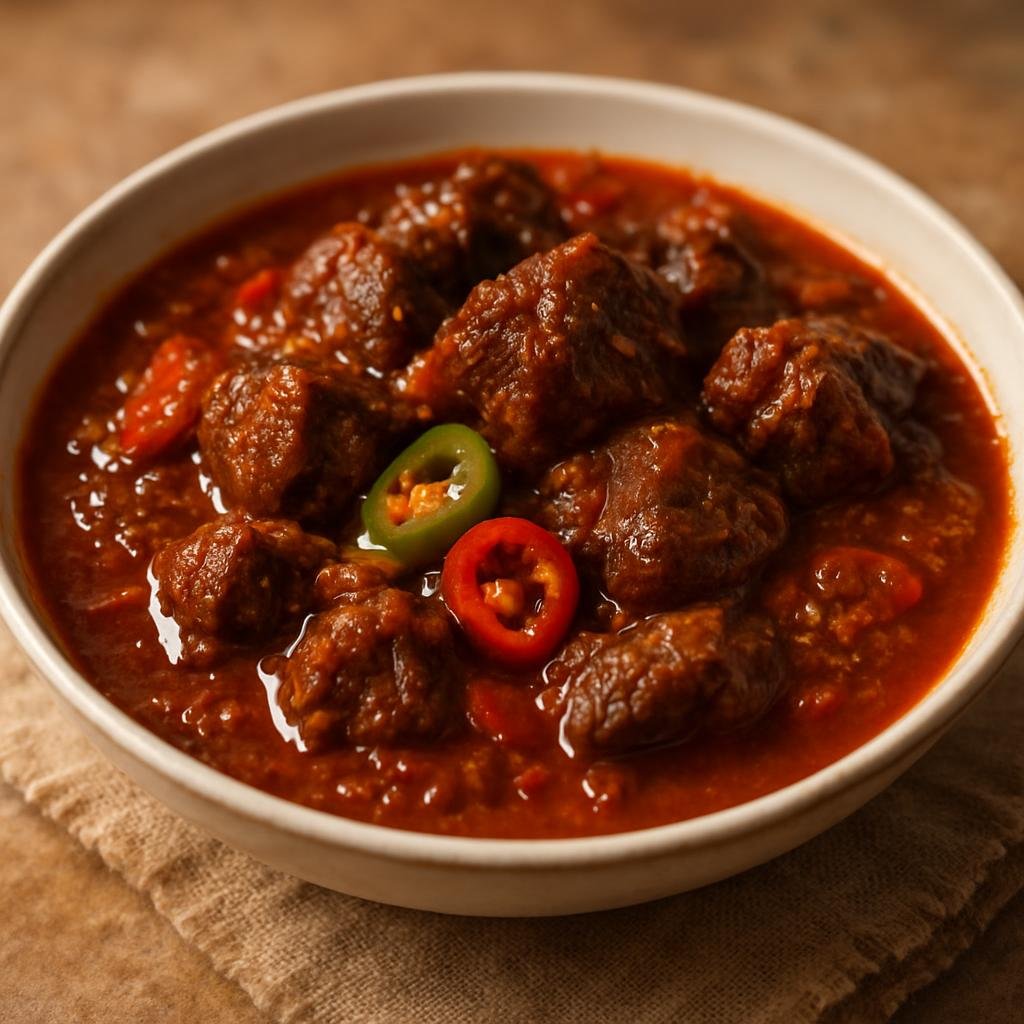
Serving Size: 6
Approximate Time
Prep
20 min
Cook
2 hrs
Total
2 hrs 20 min
Ingredients
900 g bone-in goat meat, cut into chunks (estimated 600 g cooked edible meat after bone and cooking losses; estimate for nutrition purposes)
10 g salt
1 g ground black pepper
27 g palm oil (30 ml); use palm oil
200 g onion, sliced
20 g garlic, minced
6 g fresh ginger, finely grated
1 habanero pepper, about 10 g, whole for milder heat or chopped for hotter stew
30 g tomato paste
400 g ripe tomatoes, chopped
480 ml beef stock
1 g dried thyme
2 bay leaves, about 0.5 g total
15 ml soy sauce
30 g chopped spinach
32 g peanut butter
27 g vegetable oil (30 ml), for finishing
370 g dry long-grain white rice, rinsed, for serving
Instructions
1. Season the goat: Pat the goat dry and coat it with the salt and black pepper. Keep the stated 900 g gross bone-in amount; the estimated cooked edible yield for nutrition purposes is 600 g.
2. Brown the goat: Heat the palm oil in a heavy pot over medium-high heat. Brown the goat in batches, turning to color the pieces, about 6–8 minutes per batch. Transfer the browned pieces to a plate.
3. Start the stew: Reduce the heat to medium. Add the onion, garlic, and ginger to the pot and cook, stirring, until softened, about 5–7 minutes. Stir in the tomato paste and cook for 2 minutes, then add the chopped tomatoes and cook until they begin to break down.
4. Braise: Return the goat and any accumulated juices to the pot. Add the beef stock, habanero, thyme, bay leaves, and soy sauce. Bring to a gentle simmer, cover, and cook over low heat for 1½–2 hours, until the goat is tender. Add water if needed to prevent the stew from becoming too dry.
5. Finish the stew: Stir in the spinach and peanut butter during the last 10 minutes of cooking. Remove the bay leaves. Stir in the finishing vegetable oil, taste, and adjust seasoning if needed.
6. Cook and serve the rice: Cook the rinsed rice according to package directions. Serve the stew over the rice.
Estimated Nutritional Information*
Per serving | Servings: 6
Calories: 486 kcal
Carbohydrates: 59.1 g
Protein: 28 g
Fat: 14.8 g
Saturated fat: 4.4 g
Cholesterol: 57 mg
Fiber: 3 g
Sodium: 894 mg
Potassium: 809 mg
Calcium: 68 mg
Iron: 6.49 mg
Vitamin A: 57 µg RAE
Vitamin C: 17.7 mg
Generated: 2026-11-06T06:52:41+00:00
*Values are estimates based on USDA data and mathematical calculations. Actual values may vary. Where data are unavailable, those contributions are excluded.