Entree: South Korea – Gangwon – 오징어순대 ➤ Ojingeo-sundae (Stuffed squid sausage made from squid filled with seasoned pork, glass noodles, and vegetables)
Food safety reminder: Follow safe food-handling practices and use a food thermometer to verify safe internal cooking temperatures.
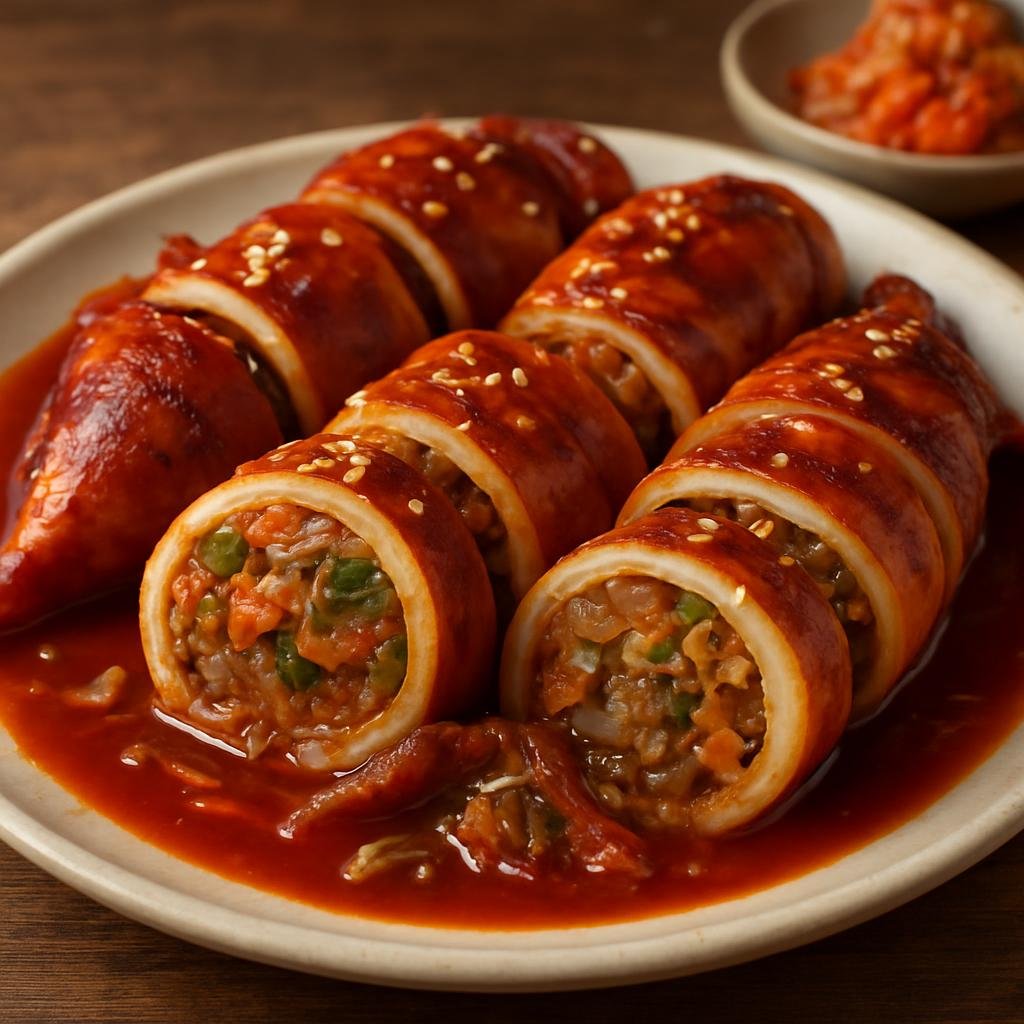
Serving Size: 4
Approximate Time
Prep
15 min
Cook
20 min
Total
35 min
Ingredients
U.S. measurements first, metric equivalents in parentheses. Conversions are approximate; oz means weight ounces, not fluid ounces.
- 2 medium squid tubes, cleaned with tentacles reserved for filling, approx. 10 oz (280 g) total
- 1/2 lb (225 g) ground pork
- 3 oz (85 g) sweet potato glass noodles (dangmyeon), dried
- 1 cup (150 g) yellow or white onion, finely chopped
- 3 cloves (0.53 oz (15 g)) garlic, minced
- 2 scallions, thinly sliced (approx. 1 7/16 oz (40 g))
- 2 tbsp (30 ml) soy sauce
- 1 tbsp (15 ml) sesame oil
- 1 tbsp (7 g) gochugaru (Korean red pepper flakes)
- 1 tsp (5 g) sugar
- 1 tsp (5 g) salt
- 1/2 tsp (2.5 g) ground black pepper
- 2 tbsp (16 g) potato starch (or cornstarch)
- 2 tbsp (30 ml) vegetable oil for searing
- 1 cup (240 ml) light anchovy or kelp broth for braising
- Dipping sauce: 2 tbsp (30 ml) soy sauce, 1 tbsp (15 ml) rice vinegar, 1 tsp (5 g) gochugaru, 1 tsp (5 ml) sesame oil
Show original ingredient measurements
- 2 medium squid tubes, cleaned with tentacles reserved for filling, approx. 10 oz (280 g) total
- 1/2 lb (225 g) ground pork
- 3 oz (85 g) sweet potato glass noodles (dangmyeon), dried
- 1 cup (150 g) yellow or white onion, finely chopped
- 3 cloves (15 g) garlic, minced
- 2 scallions, thinly sliced (approx. 40 g)
- 2 tbsp (30 ml) soy sauce
- 1 tbsp (15 ml) sesame oil
- 1 tbsp (7 g) gochugaru (Korean red pepper flakes)
- 1 tsp (5 g) sugar
- 1 tsp (5 g) salt
- 1/2 tsp (2.5 g) ground black pepper
- 2 tbsp (16 g) potato starch (or cornstarch)
- 2 tbsp (30 ml) vegetable oil for searing
- 1 cup (240 ml) light anchovy or kelp broth for braising
- Dipping sauce: 2 tbsp (30 ml) soy sauce, 1 tbsp (15 ml) rice vinegar, 1 tsp (5 g) gochugaru, 1 tsp (5 ml) sesame oil
Instructions
U.S. measurements first, metric equivalents in parentheses. Conversions are approximate.
1. Soak the glass noodles in warm water until softened, about 10 minutes, then drain and roughly chop into shorter strands. Reserve.
2. Chop the reserved squid tentacles finely. In a large bowl combine ground pork, chopped tentacles, chopped noodles, onion, garlic, scallions, soy sauce, sesame oil, gochugaru, sugar, salt, pepper and potato starch; mix until evenly combined.
3. Stuff each cleaned squid tube with the filling, pressing gently but not overfilling (leave ~1/2 inch (1.27 cm) at the top). Seal the open end with a toothpick.
4. Heat vegetable oil in a wide skillet over medium-high heat. Sear the stuffed squid briefly, 1–2 minutes per side, until lightly browned to help set the exterior.
5. Add the broth to the pan, reduce heat to medium-low, cover and simmer gently 12–18 minutes until the filling is cooked through and squid is tender. Alternatively steam the stuffed squid for 15–20 minutes.
6. Remove squid and let rest 5 minutes, then slice into 1/2-inch (1.27 cm) rounds. Whisk dipping sauce ingredients together and serve alongside the sliced ojingeo sundae.
Show original instructions
1. Soak the glass noodles in warm water until softened, about 10 minutes, then drain and roughly chop into shorter strands. Reserve.
2. Chop the reserved squid tentacles finely. In a large bowl combine ground pork, chopped tentacles, chopped noodles, onion, garlic, scallions, soy sauce, sesame oil, gochugaru, sugar, salt, pepper and potato starch; mix until evenly combined.
3. Stuff each cleaned squid tube with the filling, pressing gently but not overfilling (leave ~1/2 inch at the top). Seal the open end with a toothpick.
4. Heat vegetable oil in a wide skillet over medium-high heat. Sear the stuffed squid briefly, 1–2 minutes per side, until lightly browned to help set the exterior.
5. Add the broth to the pan, reduce heat to medium-low, cover and simmer gently 12–18 minutes until the filling is cooked through and squid is tender. Alternatively steam the stuffed squid for 15–20 minutes.
6. Remove squid and let rest 5 minutes, then slice into 1/2-inch rounds. Whisk dipping sauce ingredients together and serve alongside the sliced ojingeo sundae.
Estimated Nutritional Information*
Per serving | Servings: 4
Calories: 375 kcal
Carbohydrates: 15.6 g
Protein: 22.6 g
Fat: 24.8 g
Saturated fat: 6.5 g
Cholesterol: 204 mg
Fiber: 2.4 g
Sodium: 1003 mg
Potassium: 598 mg
Calcium: 68 mg
Iron: 1.74 mg
Vitamin A: 200 µg RAE
Vitamin C: 12.1 mg
Generated: 2026-11-05T21:32:22+00:00
*Values are estimates based on USDA data and mathematical calculations. Actual values may vary. Where data are unavailable, those contributions are excluded.