Entree: Marshall Islands – Coconut Crab (Island-style crab cooked in rich coconut milk with ginger, garlic, and local aromatics)
Food safety reminder: Follow safe food-handling practices and use a food thermometer to verify safe internal cooking temperatures.
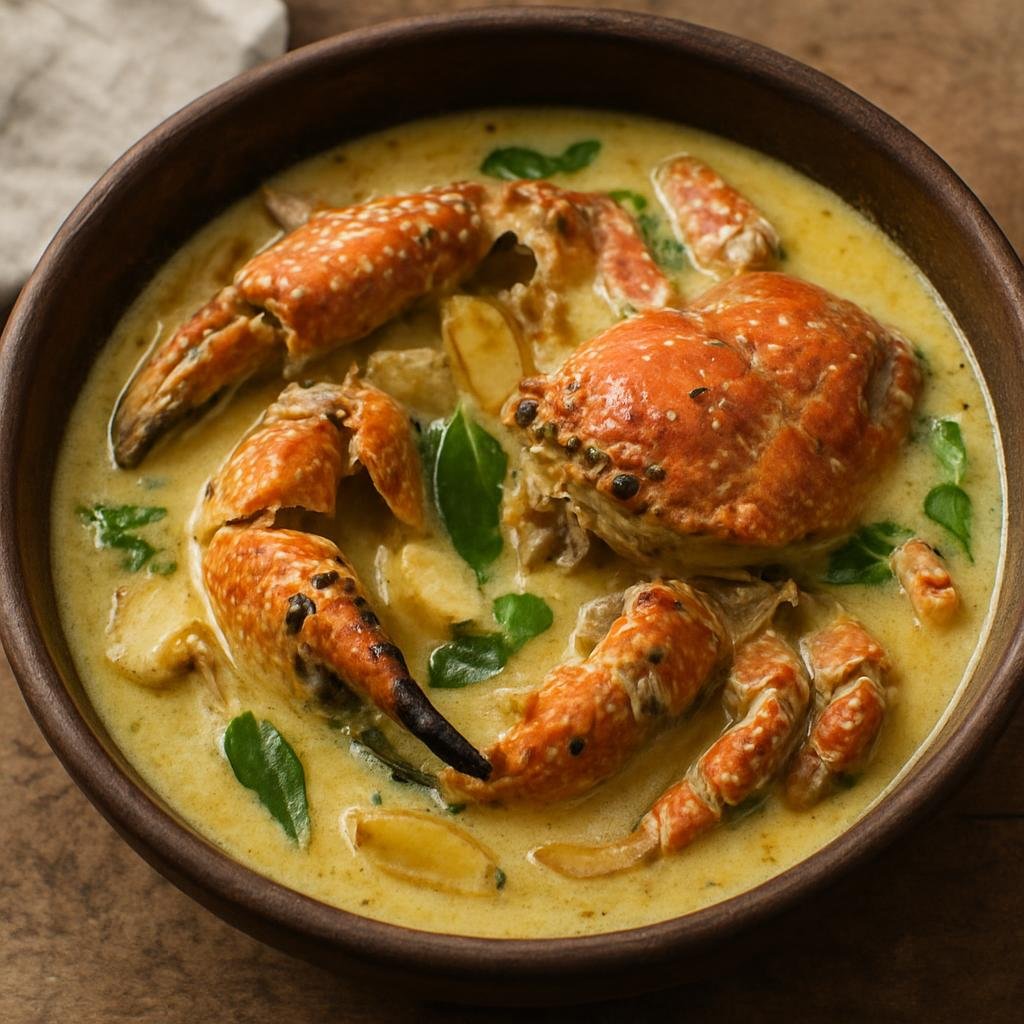
Serving Size: 4
Approximate Time
Prep
15 min
Cook
16 min
Additional
30 min
Total
1 hr 1 min
Ingredients
Please clarify whether the stated 2.5 lb (1.1 kg) is edible crab meat or the whole cleaned crab including shell; the line says “usable meat,” but also specifies a whole crab cut into pieces.
2 tbsp (30 ml) coconut oil or neutral oil
1 medium shallot, thinly sliced, about 2 oz (60 g)
3 cloves garlic, minced, about 0.5 oz (15 g)
1 tbsp (15 g) fresh ginger, minced
1 small fresh chili, sliced, about 5 g (adjust to taste)
2 cups (480 ml) full-fat coconut milk (fresh or canned)
1 cup (240 ml) young coconut water and scraped flesh, chopped
1 tbsp (15 ml) fish sauce or sea salt to taste
1 tbsp (15 ml) fresh lime juice
1/2 tsp (2 g) ground turmeric or 1 tbsp (6 g) fresh grated turmeric
1 tsp (4 g) granulated sugar (optional, to balance acidity)
2 sprigs pandan leaf or 1 bay leaf (optional for aroma)
2 tbsp (30 ml) chopped fresh cilantro or local island herb for garnish
Salt and freshly ground black pepper, to taste
Instructions
1. Rinse crab pieces and pat dry. Season lightly with salt and pepper.
2. Heat the coconut oil in a large heavy pot over medium heat. Add shallot and sauté until soft and translucent, about 4–5 minutes.
3. Add the garlic, ginger, and sliced chili; cook, stirring, for 1 minute until aromatic.
4. Stir in the turmeric and then add the coconut milk and young coconut flesh with its water. Bring to a gentle simmer.
5. Add the crab pieces to the simmering coconut broth, nestle pandan or bay leaf if using, and spoon sauce over the crab to cover as much as possible.
6. Cover and simmer gently for 12–16 minutes, turning the crab once halfway through, until the crab meat is opaque and cooked through.
7. Stir in fish sauce, lime juice, and sugar (if using). Taste and adjust seasoning with salt and pepper.
8. Remove pandan leaf or bay leaf. Garnish with chopped cilantro and serve immediately with steamed taro, breadfruit, or rice.
Estimated Nutritional Information*
Per serving | Servings: 4
Calories: 573 kcal
Carbohydrates: 67.8 g
Protein: 4.8 g
Fat: 36.3 g
Saturated fat: 31.1 g
Sodium: 380 mg
Potassium: 960 mg
Calcium: 87 mg
Iron: 3.55 mg
Vitamin A: 7 µg RAE
Vitamin C: 29.2 mg
Generated: 2026-11-06T07:24:47+00:00
*Values are estimates based on USDA data and mathematical calculations. Actual values may vary. Where data are unavailable, those contributions are excluded.