Appetizer: Mexico – Colima, Western Mexico – Tostadas de Mariscos
Food safety reminder: Follow safe food-handling practices and use a food thermometer to verify safe internal cooking temperatures.
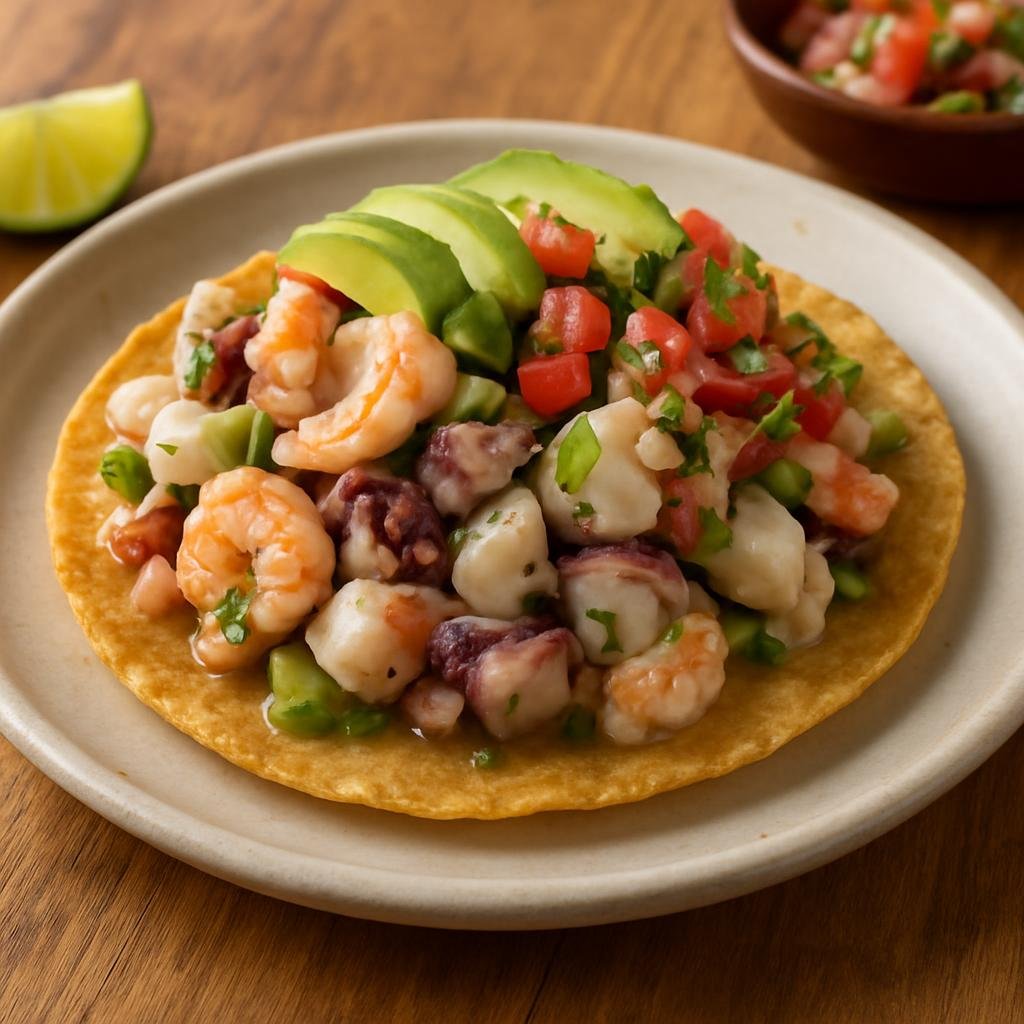
Serving Size: 6
Approximate Time
Prep
25 min
Cook
50 min
Additional
20 min
Total
1 hr 10 min
Ingredients
- 6 crisp tostada shells (6 shells; approx. 300 g)
- 1/2 lb (225 g) shrimp, peeled, cooked, halved
- 8 oz (225 g) cooked octopus, chopped
- 8 oz (225 g) firm white fish (e.g., sea bass or tilapia), cooked and flaked
- 3/4 cup (180 ml) fresh lime juice (about 6–8 limes)
- 1 tsp (5 g) kosher salt, plus more to taste
- 1/4 tsp (1 g) freshly ground black pepper
- 2 medium roma tomatoes, diced (about 10 oz / 280 g)
- 1/2 medium red onion, finely chopped (about 1/2 cup / 75 g)
- 1 small jalapeño, seeded and finely chopped (about 10 g) — or serrano for more heat
- 1/2 cup (30 g) fresh cilantro, chopped
- 2 medium avocados, sliced (about 400 g total)
- 2 cups (100 g) shredded iceberg lettuce or cabbage
- 1/4 cup (60 ml) olive oil (optional, for salsa or drizzling)
- Lime wedges, for serving
- 1/4 tsp (1 g) ground cumin (optional, a regional accent)
Salsa roja (quick charred tomato salsa)
- 3 medium tomatoes (about 12 oz / 340 g)
- 1 small garlic clove
- 1/4 small white onion (about 30 g)
- 1 serrano or jalapeño (about 10 g)
- 1 tbsp (15 ml) fresh lime juice
- 1/2 tsp (2.5 g) kosher salt
- 1 tbsp (15 ml) olive oil (optional)
Instructions
Short Description:
Crispy tostada shells piled with a bright Colima-style mix of locally sourced shrimp, octopus, and white fish marinated in lime, finished with avocado and a fresh salsa for a bright seaside starter.

Regional Notes:
This Colima version highlights a mixed catch—shrimp, octopus, and local white fish—lightly marinated in lime rather than heavily sauced, and is finished simply with avocado and a fresh salsa. Unlike some northern or Veracruz-style seafood tostadas that use heavier tomato-based sauces, Colima tostadas emphasize the citrus-cured seafood and local seafood variety.

1. Cook the seafood: In a medium pot, bring salted water to a gentle simmer. Add fish fillets and poach 3–4 minutes until just opaque; remove and cool. Add shrimp and poach 1–3 minutes until pink and cooked through; remove and cool. (If octopus is not already cooked, simmer tender in water 35–45 minutes before chopping.) Drain and cool all seafood.
2. Prepare the seafood pieces: Flake the cooked fish into bite-sized pieces (approx. 8 oz / 225 g usable). Halve or chop the shrimp into bite-size pieces (from 1/2 lb / 225 g). Chop the cooked octopus into small cubes (8 oz / 225 g).
3. Marinate in lime: In a glass or stainless steel bowl, combine the seafood with 3/4 cup (180 ml) fresh lime juice, 1 tsp (5 g) salt, 1/4 tsp (1 g) black pepper, and 1/2 cup (30 g) chopped cilantro. Stir gently to coat, cover, and refrigerate 15–25 minutes to allow the lime to lightly flavor the cooked seafood.
4. Make the quick salsa roja: Char the 3 tomatoes (12 oz / 340 g) under a broiler or in a hot skillet until the skins blister and blacken in spots. Cool slightly, then blend with 1 garlic clove, 1/4 small onion (30 g), 1 serrano or jalapeño (10 g), 1 tbsp (15 ml) lime juice, 1/2 tsp (2.5 g) salt, and 1 tbsp (15 ml) olive oil until coarsely smooth. Taste and adjust salt or heat.
5. Mix the vegetable for the seafood topping: After marinating, gently fold in the diced roma tomatoes (10 oz / 280 g), remaining 1/2 medium red onion (75 g), and chopped jalapeño (if using extra heat) into the seafood mixture. Taste and adjust salt and lime if needed. If using, add 1/4 tsp (1 g) ground cumin for a subtle regional note.
6. Prepare tostadas for assembly: Lay out 6 tostada shells. On each, place a thin layer (about 1/3 cup / 40 g) of shredded lettuce or cabbage to provide crunch and a barrier against sogginess.
7. Assemble: Spoon a generous portion (about 1/2 cup / 120 g) of the marinated seafood mix onto each lettuce-lined tostada. Top with 2–3 slices of avocado, a spoonful of the salsa roja, and a sprinkle of chopped cilantro.
8. Finish and serve: Drizzle a little olive oil if desired and serve immediately with lime wedges for squeezing. Serve right away so the tostadas remain crisp.
Estimated Nutritional Information*
Per serving | Servings: 6
Calories: 582 kcal
Carbohydrates: 49.2 g
Protein: 26.2 g
Fat: 33.9 g
Sodium: 1043 mg
Potassium: 1151 mg
Calcium: 140 mg
Iron: 5.61 mg
Generated: 2026-11-05T20:03:33+00:00
*Values are estimates based on USDA data and mathematical calculations. Actual values may vary. Where data are unavailable, those contributions are excluded.