Entree: Mexico – Tabasco – Robalo a la Tabasqueña (Pan-seared snook fillets dressed in a Tabasqueña tomato, green chile, and herb sauce)
Food safety reminder: Follow safe food-handling practices and use a food thermometer to verify safe internal cooking temperatures.
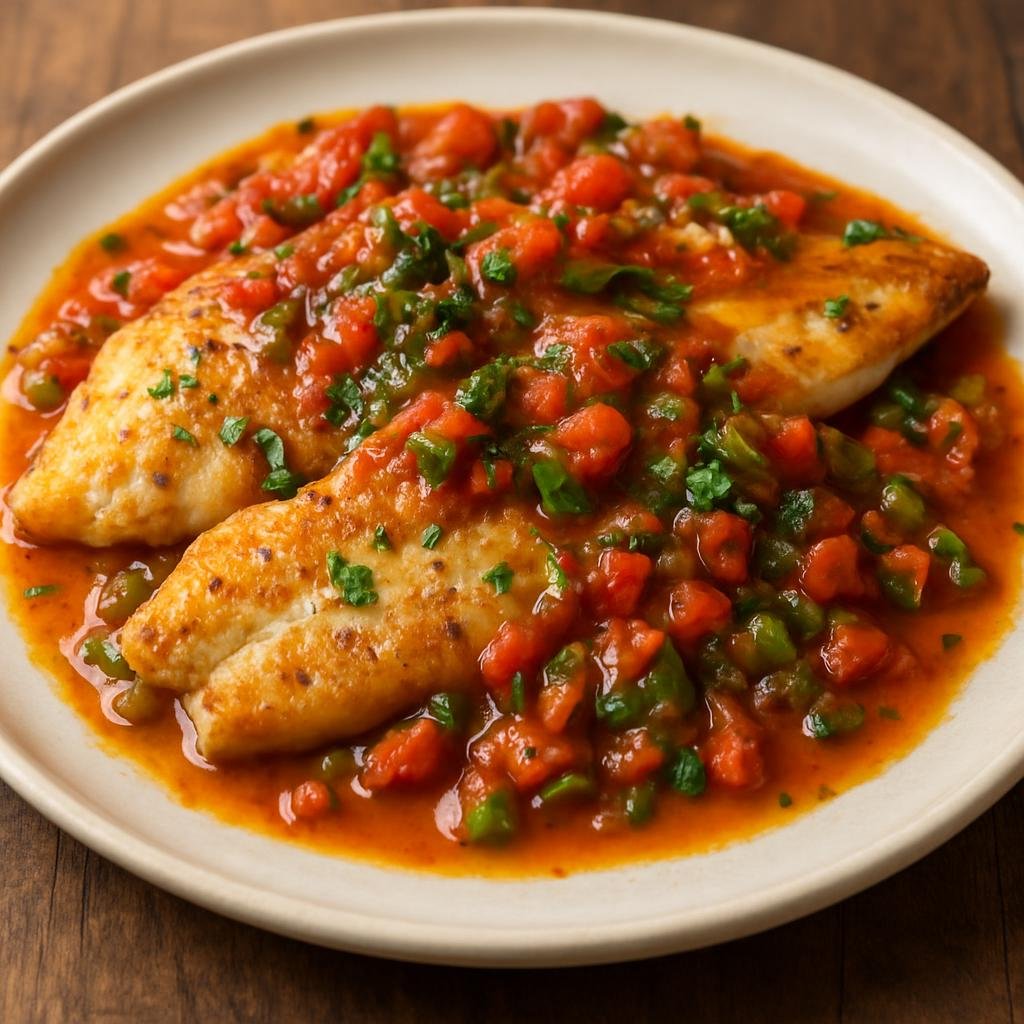
Serving Size: 4
Approximate Time
Prep
10 min
Cook
20 min
Total
30 min
Ingredients
- 2 robalo (snook) fillets, approx. 8 oz (225 g) each
- 2 tbsp (30 ml) vegetable oil
- 1 tbsp (15 ml) butter
- 1 medium onion, thinly sliced (about 6 oz / 170 g)
- 2 medium tomatoes, chopped (approx. 10 oz / 280 g)
- 2 serrano chiles, stemmed and minced
- 3 cloves garlic, minced
- 1/2 cup (120 ml) fish stock or water
- 1/2 cup (15 g) fresh cilantro, chopped (packed)
- 1 tbsp (4 g) fresh epazote, chopped (or 1 tsp dried epazote)
- 1 lime, juiced
- Salt to taste
- Freshly ground black pepper to taste
- 1 tbsp (15 ml) vegetable oil or neutral oil for finishing (optional)
- Warm corn tortillas or steamed rice for serving
Instructions
1. Pat the robalo fillets dry and season both sides with salt and pepper. Heat 2 tbsp (30 ml) vegetable oil in a large skillet over medium-high heat until shimmering.
2. Sear the fillets skin-side down (if skin on) 3–4 minutes until crisp, then carefully flip and sear 1–2 minutes more until just cooked through; transfer to a plate and keep warm.
3. In the same skillet reduce heat to medium, add 1 tbsp (15 ml) butter and 1 medium thinly sliced onion; cook until softened and translucent, about 4–5 minutes.
4. Add 3 cloves garlic and 2 serrano chiles and cook 30–60 seconds until fragrant. Stir in 2 medium chopped tomatoes and cook until they begin to break down, about 5 minutes.
5. Pour in 1/2 cup (120 ml) fish stock or water, scrape up browned bits, and simmer gently 5 minutes to meld flavors.
6. Stir in 1/2 cup (15 g) chopped cilantro and 1 tbsp (4 g) chopped epazote, then add the juice of 1 lime; adjust salt and pepper to taste.
7. Return the seared fillets to the skillet, spooning sauce over them; warm through 1–2 minutes to marry flavors.
8. If desired, drizzle 1 tbsp (15 ml) oil over the fish for shine. Serve the robalo hot with sauce spooned over and warm corn tortillas or steamed rice on the side.
Estimated Nutritional Information*
Per serving | Servings: 4
Calories: 162 kcal
Carbohydrates: 10 g
Protein: 2.1 g
Fat: 13.5 g
Cholesterol: 8 mg
Fiber: 2.4 g
Sodium: 92 mg
Potassium: 324 mg
Calcium: 42 mg
Iron: 0.59 mg
Vitamin A: 71 µg RAE
Vitamin C: 27.7 mg
Generated: 2026-11-05T19:57:09+00:00
*Values are estimates based on USDA data and mathematical calculations. Actual values may vary. Where data are unavailable, those contributions are excluded.